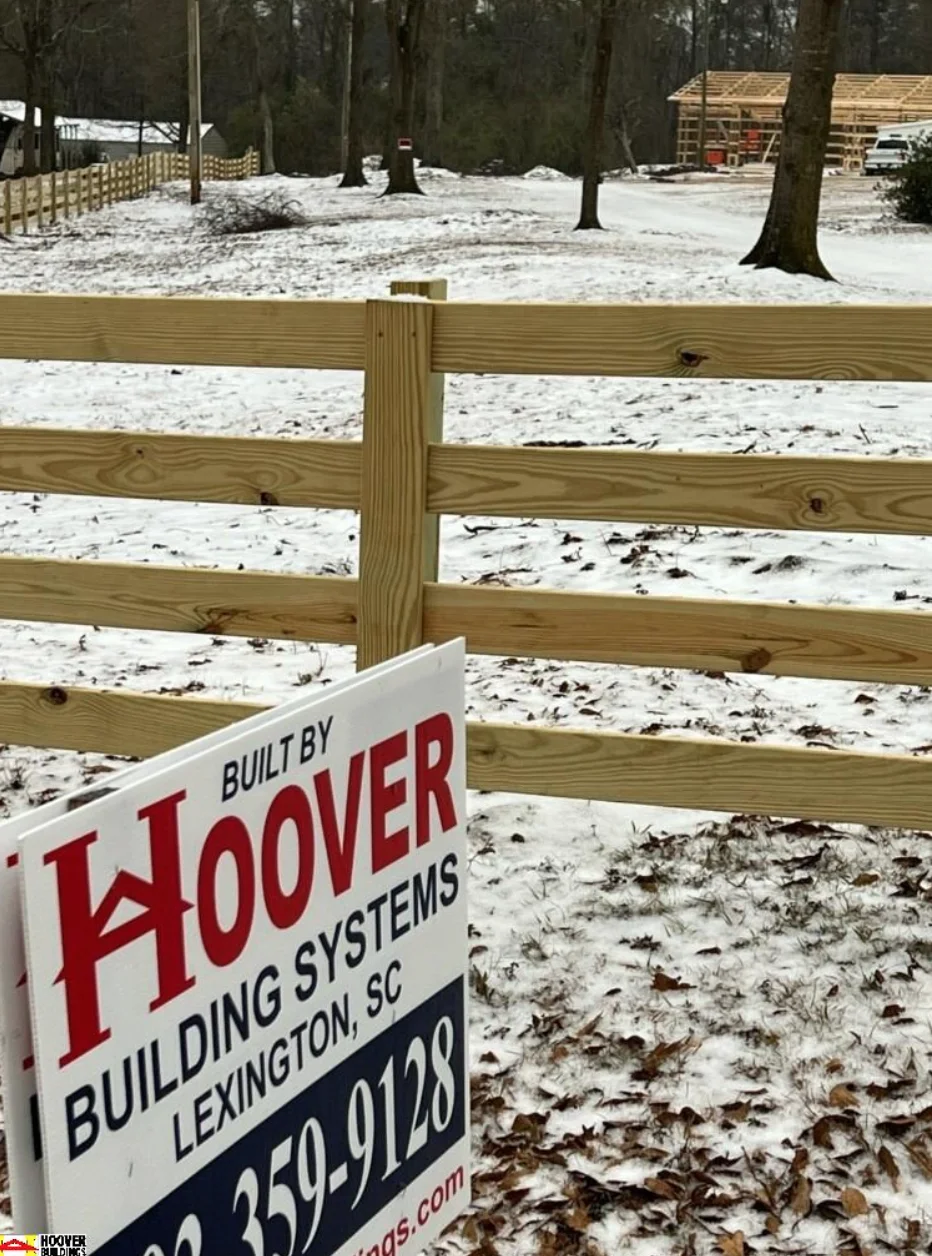

Post-Frame vs. Tubular Buildings: Pros, Cons, and Cost Comparison. If you are researching the difference between post-frame buildings and tubular buildings, you are not alone. Property owners across South Carolina and the Southeast often compare these two building types when planning a new pole barn, workshop, agricultural building, or commercial structure. This guide breaks down the pros, cons, and long-term value of post-frame construction versus tubular steel buildings.
What Is a Post-Frame Building?
Post-frame buildings, commonly known as pole barns, use large pressure-treated wood posts embedded into the ground or mounted to engineered foundations. This construction method allows for wide clear spans, fewer interior columns, and excellent strength against wind and snow loads. Post-frame construction is widely used for agricultural buildings, storage buildings, workshops, and commercial facilities.
What Is a Tubular Steel Building?
Tubular buildings are framed with light-gauge steel tubing that is bolted together on-site. These metal buildings are often marketed as affordable or quick-install solutions for basic storage or equipment cover. While tubular steel buildings can meet short-term needs, they typically offer less flexibility and durability compared to post-frame buildings.
Post-Frame vs. Tubular Buildings Comparison
| Feature | Post-Frame Buildings | Tubular Buildings |
|---|---|---|
| Structural Strength | Engineered for high wind & snow loads using embedded posts | Light-gauge steel tubing with lower load ratings |
| Longevity | Designed for permanent, long-term use | Often considered semi-permanent |
| Interior Space | Clear-span interiors with minimal bracing | Interior bracing reduces usable space |
| Customization | Highly customizable sizes, doors, heights, and overhangs | Limited to standard sizes |
| Insulation & Energy Efficiency | Easy to insulate for conditioned spaces | Difficult to insulate and control condensation |
| Foundation Options | Piers, slabs, or full foundations | Typically slab or ground anchors only |
| Expansion Potential | Easy to expand or modify | Expansion often impractical |
| Maintenance | Low maintenance over time | Requires periodic bolt and frame inspections |
| Appearance | Residential or commercial finished appearance | Industrial or utilitarian look |
| Cost Over Time | Lower lifetime cost and higher ROI | Lower upfront cost, higher long-term limitations |
Advantages of Post-Frame Buildings
Post-frame buildings offer superior durability, flexibility, and long-term value. They are ideal for property owners looking for a permanent structure that can grow with their needs. Because post-frame buildings are easier to insulate and customize, they are commonly chosen for heated workshops, office spaces, agricultural buildings, and commercial facilities.
When a Tubular Building May Be a Good Fit
Tubular steel buildings can make sense for temporary storage, basic equipment coverage, or situations where minimal customization is required. They are often selected for short-term use or when speed of installation is the primary concern.
Post-Frame vs. Tubular Buildings: Which Is Better?
For most residential, agricultural, and commercial applications, post-frame buildings offer a better return on investment. While tubular buildings may have a lower initial price, post-frame construction provides greater durability, flexibility, energy efficiency, and resale value.
Build with Confidence
Hoover Buildings specializes in custom post-frame buildings in South Carolina. Whether you need a pole barn, workshop, or commercial post-frame building, our team can help you design a structure that fits your property and budget. Contact Hoover Buildings today to get started.
Give us a call at (803) 359-9128 or get a free quote online to start planning your post-frame building.